

How to Find a Web Developer: Best Websites & Hiring Tips
Need a web developer? Learn how to hire the right one, what it costs, red flags to avoid, and the best platforms to find vetted talent in 2026.

Most guides on how to find a web developer tell you to 'define your needs' and 'check their portfolio' like you hadn't already thought of that. So let's skip the obvious and talk about what actually makes a web development project succeed or fail at the hiring stage — which platforms are worth your time, what specific skills you should be testing for, and the mistakes that cost business owners the most money.
The short version: finding the right web developer in 2026 is less about where you look and more about knowing what you need. Whether you're a co founder building your first product or a business owner trying to figure out how to move your company's digital transformation forward, the approach is the same. Be specific. Vet properly. Don't optimise purely on price.
What is a web developer?

A web developer is a software developer — but that title covers an enormous range. At one end you've got website developers building WordPress websites and landing pages. At the other end you've got software engineers designing complex web applications that handle millions of users and require serious back-end architecture. The gap between those two things is massive, and confusing them is one of the most expensive hiring mistakes a business owner can make.
The basic split is front-end vs back-end. Front-end developers handle what users see and interact with — the stuff web designers often influence too. Back-end developers handle what makes it work: servers, databases, APIs, the logic running behind the scenes. Then there are full stack developers who work across both, which sounds great until you realise most people are stronger on one side than the other. If you're unsure which type of developer you actually need, reading up on web design vs web development is a decent place to start — the distinction matters for scoping your project requirements.
Beyond the ability to write code, the web developers worth hiring understand performance, security, and user experience as default concerns — not afterthoughts. They can translate business goals into technical decisions. That's the difference between a developer and a good developer, and it's what you're actually trying to find.
5 Best Websites to Find a Web Developer
There are dozens of platforms. Most aren't worth your time. Here are the best websites for finding a web developer in 2026, broken down honestly — including who each one actually works for.
Empat — Best for Small Businesses and Startups
Empat is a Ukraine-based development company. Unlike most platforms on this list, they're not a marketplace where you scroll through profiles and hope for the best. They offer custom website development services and put together a dedicated development team around your specific project needs.
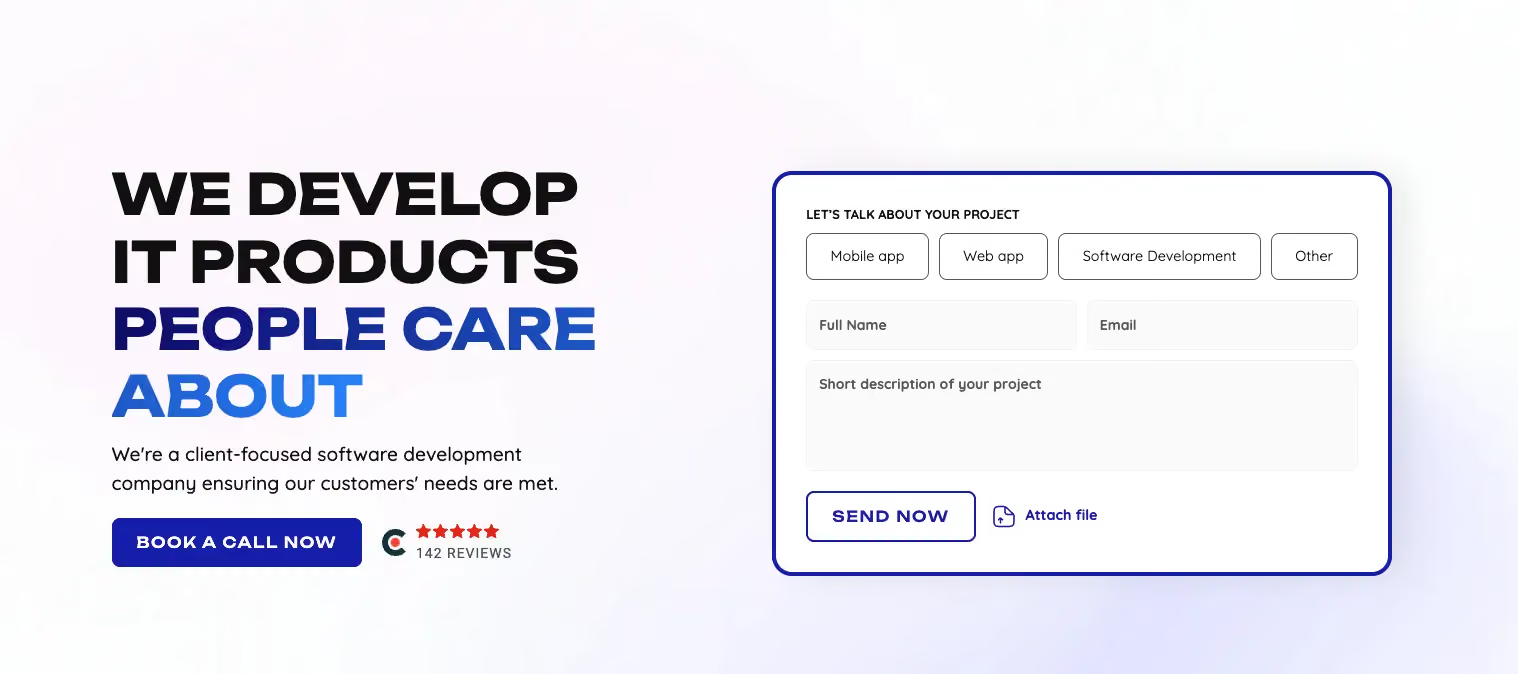
What makes them different is the combination of technical expertise and communication. A lot of development services are good at writing code and terrible at keeping clients informed. Empat has built products across healthcare, fintech, media, and entertainment — they're not showing up cold. They understand project goals across industries and know how to adapt their skill set accordingly.
You can hire dedicated developers for ongoing support, or bring in specialists for a single project. Their dedicated teams integrate closely with your existing setup, which makes for a far more seamless experience than the typical outsourced arrangement. For small businesses that want high quality work without building an in-house team, this model is genuinely cost effective. They also offer options to hire a Python developer if you need specialist back-end expertise for scaling web applications.
Best for: Small businesses, startups, co-founders who need to move fast, and larger companies that want a development team that works closely with their internal people.
Toptal
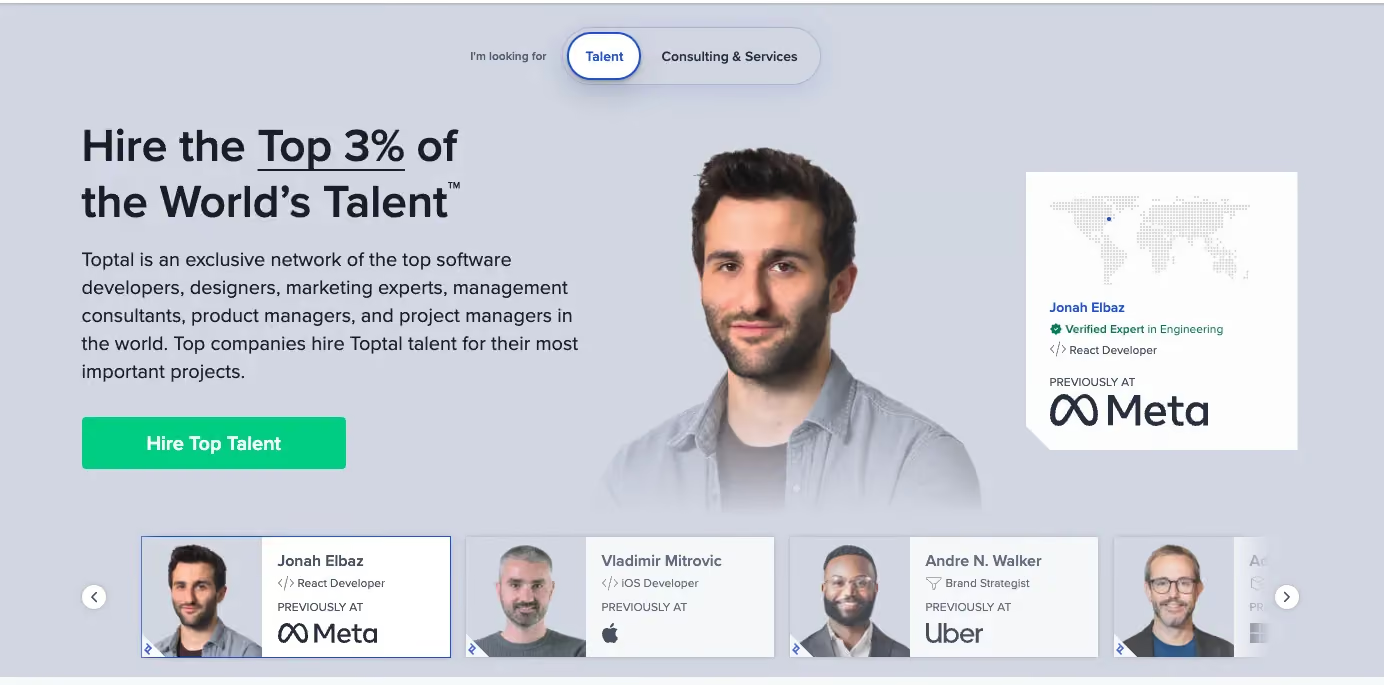
Toptal markets itself on vetting. The claimed "top 3%" of developers is a marketing line, but the talent is genuinely strong. You're accessing a talent pool that's been screened, which saves time compared to sifting through unvetted profiles. The tradeoff is cost — Toptal engineers come at premium rates — and the fact that you're still working with freelancers, so the usual freelancer risks around availability and continuity apply. It's worth reading up on Toptal competitors before committing, since the pricing is steep and alternatives often offer comparable talent.
Best for: Medium-complexity projects with well-defined technical requirements, where budget isn't a major constraint.
Gigster
Gigster builds you an entire outsourced team: developers, designers, a project manager. On paper that sounds like less work. In practice, it means less visibility and less ability to course-correct mid-project. For enterprise-level work with a locked scope, it can work. For everyone else, if you want to be hands on with your own project, the model creates friction. Check out Gigster alternatives if you want more flexibility in how you structure the development process.
Best for: Large enterprises with fixed requirements and experience managing outsourced teams.
Guru
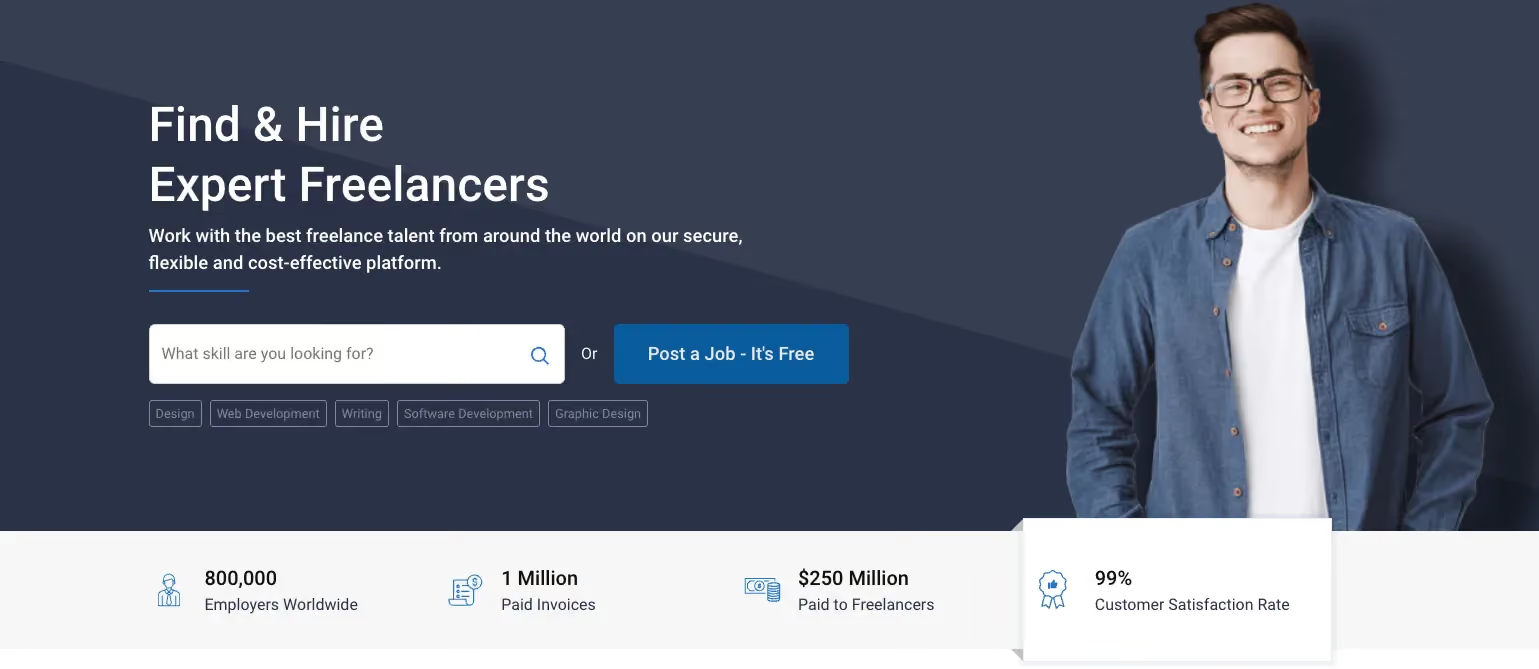
Guru is a freelance marketplace that doesn't get talked about as much as Upwork but has a decent talent pool and flexible pricing that works for smaller budgets. The contract structure helps with clear project requirements upfront. The downside is quality variance — there are many developers on the platform and the gap between them is wide. If you need specific skills like React Native developers for mobile app development, filter hard and ask for relevant past work immediately. If it's not the right fit, there are useful Guru alternatives worth considering.
Best for: Short-term, well-scoped work with a limited budget.
Upwork

Upwork has the largest volume of freelance developer profiles anywhere. That's its strength and its problem — there are many developers of wildly varying quality, and without a strong hiring process you'll waste a lot of time. The platform tools are solid: payment protection, time tracking, dispute resolution. But the lack of vetting means you're doing most of the filtering yourself. Upwork competitors have been improving on quality controls. Worth checking if you need mobile app developers specifically, where the experience spread is especially wide.
Best for: Businesses that have the time to vet candidates carefully and a very clear brief to filter against.
How to hire a web developer? Step-by-step
Most hiring processes for web developers fail before the interview stage because the brief is vague. Here's how to actually do it.

Step 1: Define your project needs before you talk to anyone
'I need a web developer' is not a brief. What are you building? A refreshed WordPress website, a new e-commerce store, or a full custom web application? These are completely different web development projects requiring completely different skill sets and budgets. Get your project requirements written down first. If you're not sure which type of developer you need, think about whether your project needs serious full stack development or whether you just need a front-end specialist. Defining this upfront saves weeks.
Step 2: Write a job posting that says something
Most job postings for web development roles are useless. 'We need a talented developer who is passionate about technology' tells potential developers nothing. Include the tech stack, the type of web applications involved, whether this is a one-off project or ongoing work, approximate timeline, and your budget range. If you're planning to hire remote developers from other time zones, say so. Post on the right job boards for the role. Specific job postings attract better candidates.
Step 3: Review past work from potential developers
Portfolios matter but context matters more. Look for past work that's actually similar to what you need. A developer who built one thing well that's relevant to your project is more useful than someone with ten mediocre case studies. For front end developer candidates, you can evaluate visually. For back-end roles, ask about specific technical decisions they made and why. Check client feedback where available — how someone handles feedback and revisions tells you a lot about how the working relationship will actually go.
Step 4: Interviews — ask about real situations
The worst interview questions are generic competency questions. Ask instead about a project that went sideways. Ask how they communicated a technical problem to a non-technical project manager or stakeholder. Ask about a decision they made mid-development that they'd make differently now. You need communication skills as much as technical skills — a developer who can't flag problems early is a liability regardless of developer experience.
Step 5: Run a Small Test Project
Give them a small, paid test project that reflects real work. Not a free full-scale build. Pay them for it — unpaid tests filter out the developers worth hiring. For a back end developer, give them a database or API task. For front-end roles, have them build a component. You're evaluating code quality, how they interpret requirements, and what they do when something is ambiguous. This test project is usually more revealing than any interview.
Step 6: Make the decision and set expectations clearly
Pick the developer who fits both the technical requirements and how your team actually works. Then write it down: deliverables, timeline, how feedback is handled, how scope changes are managed. The projects that blow up are almost always ones where this wasn't clear upfront. If the whole process sounds like too much overhead, outsourcing your web development to a company like Empat removes most of it — they handle the hiring process, vetting, and team management, which is genuinely good for minimizing risks.
What Makes a Good Web Developer?
Every article on this topic lists the same skills. Here's a more honest breakdown of what actually matters.
Core technical skills
HTML and CSS are table stakes. Any developer listing these as standout skills in 2026 is a yellow flag. What matters more is how well they understand JavaScript — it's the foundation of almost everything on the modern web, and the gap between a developer who really understands it and one who just uses it is significant. Beyond JavaScript, ask about which programming languages they work in and why — a developer who can explain the tradeoffs is more trustworthy than one who just lists everything.
When it comes to front end frameworks, most developers claim expertise in React, Angular, and Vue simultaneously. In practice most people are strong in one. If you're looking to hire JavaScript developers or specifically need Angular developers for your project, push past the skill set checkbox and ask about real project experience with that specific framework.

What Good Full Stack Developers Actually Know
Full stack development sounds like a shortcut but it's really a spectrum. Full stack developers who are genuinely strong on both sides exist — they're just rare and priced accordingly. More commonly you'll find people who are solid front-end and serviceable back-end, or vice versa. For the back-end side, skills like Node.js, Python, PHP, or Ruby each have different strengths. A good developer will explain what they'd recommend for your specific project requirements and why — not just say 'I can do whatever stack you need.'
Back End Developer Skills That Matter
Database management is one of those areas where there's a massive quality spread. SQL databases like MySQL and PostgreSQL are well understood. NoSQL databases like MongoDB are more flexible but also easier to misuse. A back end developer who has a clear opinion on when to use which — based on the actual needs of a project — is a much better signal than someone who lists every database technology and treats them as interchangeable.
APIs and integrations are part of almost every web application now: payment processors, social media feeds, third-party data sources. Web programmers comfortable with REST APIs, authentication flows, and things like webhooks and rate limiting will save you real headaches. The right developer for most modern projects also needs to be comfortable building and consuming web apps that connect to external services. Beyond that, version control via Git is non-negotiable. And ask directly about testing habits — developers who write tests by default are worth more than those who only do it when forced.
Responsive Design and SEO Best Practices

Responsive design should be baked into how a developer thinks, not something they tack on at the end. With mobile traffic making up the majority of web usage, any developer who treats multi-device user experience as an afterthought is going to cost you conversions.
Similarly, SEO best practices aren't just a marketing team's problem. Developers who build with page speed, semantic HTML, and crawlability in mind from the start produce better websites. If a developer has never thought about the relationship between their technical decisions and search visibility, that shows up in the product.
What Separates a Good Developer From a Great One: Soft Skills
Communication skills are the most underrated quality in web development. A developer who can clearly explain what they're building, flag a problem before it becomes a crisis, and translate technical constraints into plain language for a non-technical business owner is genuinely rare. Ask for examples of how they've communicated difficult situations to stakeholders or a project manager.
Attention to detail is hard to screen for but shows up immediately in the work. It's the developer who catches the broken edge case before it ships. Problem-solving ability matters more than raw knowledge — specifically, how resourceful they are when blocked. Adaptability is increasingly important too: developers who treat changing project requirements as a catastrophe make everything harder. And for any web development project involving a team, ask about the largest development team they've worked in and what their role was.
Additional Skills for More Complex Projects
Cloud services (AWS, Azure, Google Cloud) become relevant the moment you need serious uptime guarantees or need to think about scaling web applications to handle real traffic. Not every developer needs this, but for anything growth-oriented it's worth asking about.
DevOps and CI/CD knowledge is becoming more standard. Developers who understand deployment pipelines and can automate testing reduce the friction of shipping considerably. UI/UX awareness is also underrated — a developer who has actually thought about how users interact with interfaces will produce better work even without a dedicated designer in the loop.
Development Services: Freelance vs Agency vs Dedicated Team
How you hire matters as much as who you hire.
A freelance developer is the most flexible option and the highest risk. You're working with one person, which means you're exposed if they get sick, take on other clients, or just disappear mid-project (this happens more than people admit). For short, well-defined projects with a limited budget, a freelance web developer can work well. For anything that has real business stakes, the risk calculus changes.
Dedicated teams through companies like Empat are a fundamentally different arrangement. You're working with a development team that has built-in redundancy, quality oversight, and a project manager keeping things on track. It's a more seamless experience and the high quality work is more consistently delivered. The tradeoff is cost — but when you factor in the time a business owner loses managing a problematic freelancer, the math often comes out in favour of the dedicated team model. This is also the better choice when you need a broader range of development services: front-end, back-end, mobile app development, and design all under one roof.
For businesses going through digital transformation — replacing legacy systems, moving to the cloud, or building out new web applications from scratch — software development outsourcing to a company with the right track record is usually the smarter call than assembling a freelancer team from scratch.
How Much Do Business Websites and Web Applications Cost?
Rates vary significantly depending on where the developer is based, their experience level, and what you're actually building. Index.dev's 2025 global rate data puts the range at roughly $25/hr in Asia to $140/hr in North America for freelancers, with web developers averaging $45–$75/hr. Senior developers and specialists in areas like AI/ML or cloud regularly charge $100–$200/hr. Upwork's own cost guide puts the freelance range at $30–$200/hr depending on experience and specialisation.
For the actual build: a simple business website might run a few thousand dollars. A proper custom web application with serious back-end logic, third-party integrations, and a well-designed front-end is closer to $20,000–$50,000, and often more. Anyone quoting you $1,500 for a complex app is either going to cut corners, hand it off to someone more junior, or not finish it.
For a co-founder or early-stage business owner trying to manage costs: start with a scoped MVP. It's cheaper, faster to test with real users, and you'll have a much clearer picture of what to build next. For businesses further along that want to move off freelancers onto something more reliable, the dedicated team model is worth the cost. It's a cost effective solution when you factor in the full picture.
Finding the Right Freelance Developer — What People Get Wrong
Most people make the same mistakes. They write a vague job posting, get flooded with applications, pick the one with the best-looking profile, skip the test project because they're in a hurry, and then spend the next two months managing a bad relationship.
Slow down the front end of the process and it speeds up everything else. Write a specific brief. Ask for relevant past work, not just a general portfolio. Talk to their previous clients if you can — a two-minute reference call tells you more than reading any job board profile. And run a small paid test project before committing. It filters out candidates who can't actually do the work, and it tells you a lot about how someone handles project requirements in practice.
The developer experience of working with your team matters too. A technically brilliant developer who struggles to communicate or clashes with how your team works will slow you down more than a slightly less skilled developer who's easy to work closely with. That's not a soft consideration — it's a project outcome consideration.
There are many developers available in 2026 across every platform and price point. The bottleneck is almost never supply. It's clarity: knowing what you need, being able to explain it, and having a good enough process to identify the right person when they show up.
FAQ
How do I find a good web developer?
Get specific about what you're building first. A good web developer for a WordPress website refresh is a completely different profile from one who can build a custom web application with complex back-end requirements. Once you know your project needs, use platforms like Empat, Toptal, or Upwork, evaluate actual past work rather than just credentials, interview with real questions about past projects, and run a small paid test before committing.
How can I find a website developer?
Freelance platforms like Upwork and Guru have the volume. Toptal and Empat have tighter quality controls. If you have a network in tech, referrals are still the most reliable method. Write a specific job posting with a real budget range and you'll filter out most of the bad fits before you even start reviewing applications. Job boards for tech roles can also surface strong candidates, particularly for full-time or long-term engagements.
How much does it cost to hire a web developer for a website?
Depends on scope and location. A simple business website: a few thousand dollars. A proper custom web application: $20,000 to $50,000 and up. Hourly freelance rates range from around $25/hr (Eastern Europe, Asia) to $150–$200/hr for senior developers in North America or Western Europe. Don't optimise purely on price — the cheapest option usually costs more in rework and delays.
How do you hire web developers?
1. Define your project requirements specifically — what you're building, what tech stack, what timeline.
2. Write a real job posting with budget and requirements, not a wishlist.
3. Review past work relevant to your project, not just impressive-looking portfolios.
4. Interview with questions about real past situations and how they communicated problems.
5. Run a small paid test project before committing.
6. Set clear expectations in the contract on deliverables, revisions, and scope changes.
If you'd rather skip most of this, companies like Empat handle the vetting and matching process for you, which is a legitimate option especially for small businesses and teams without a dedicated technical hiring manager.


